
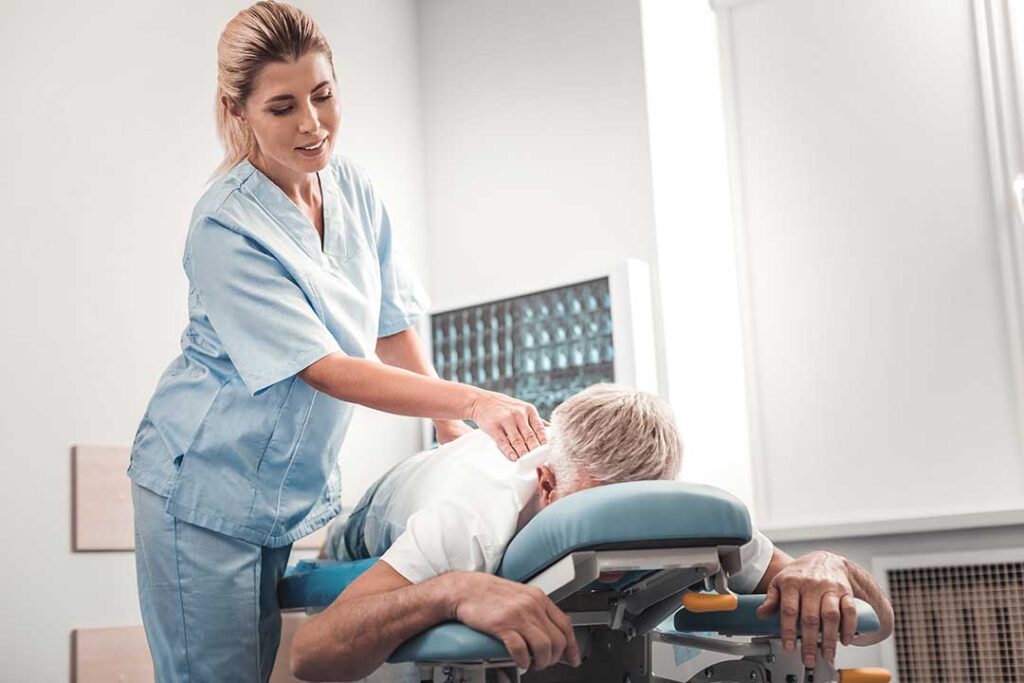
Neck pain is often linked to muscle tension, prolonged positioning, minor injuries, or age-related changes in the joints and discs. For many residents of Oneonta, NY, symptoms may be connected to desk work, phone use, driving, household tasks, seasonal outdoor work, or sleeping in an awkward position.
Most short-term neck pain improves with gentle movement, rest from aggravating activities, and attention to posture. However, certain symptoms require prompt medical evaluation.
What commonly causes neck pain?
The most frequent cause is muscle strain or tension. Neck muscles can become overloaded when the head remains in one position for too long or when the shoulders are repeatedly lifted and held tight.
Common contributors include:
- Looking down at a phone, tablet, book, or craft project for extended periods
- Working at a computer with the screen too low or too far away
- Driving with the head turned, shoulders raised, or the seat poorly adjusted
- Sleeping with the neck rotated or unsupported
- Carrying a heavy bag on one shoulder
- Repetitive lifting, reaching, shoveling, or other physical tasks
- Sudden increases in exercise or outdoor activity
- Stress-related muscle tension
Poor posture does not mean a person has “damaged” the spine. Rather, staying in one position for a long time can fatigue muscles and make normal movements feel uncomfortable. Neck pain can also occur without a single identifiable cause; several small factors may build up over the course of a day. ([medlineplus.awsqa.nlm.nih.gov](https://medlineplus.awsqa.nlm.nih.gov/ency/article/003025.htm?utm_source=openai))
Can phones and computers really cause neck pain?
Yes. Phone and computer use can contribute to neck discomfort, especially when the head is held forward for long periods. The farther the head moves in front of the shoulders, the more work the neck and upper-back muscles may need to perform.
The goal is not to maintain a rigid “perfect posture.” A better strategy is to change positions regularly:
- Raise a phone or reading material closer to eye level.
- Position a computer monitor so the top portion is near eye level.
- Keep frequently used items within easy reach.
- Rest both feet on the floor when seated.
- Let the shoulders relax instead of holding them close to the ears.
- Stand, walk, or gently move every 30 to 60 minutes.
A comfortable position that changes often is usually more sustainable than trying to hold one posture all day.
How can seasonal activities affect the neck?
Seasonal routines may expose the neck and shoulders to unfamiliar demands. In colder months, snow removal, winter driving, and carrying heavier layers can increase stiffness or muscle fatigue. During warmer months, gardening, home repairs, recreational activities, and extended outdoor work may involve bending, reaching, lifting, or looking upward.
Problems are more likely when a person does too much too quickly. Before demanding activity, spend several minutes walking or moving gently. Break large tasks into smaller periods, alternate sides when practical, and avoid twisting while lifting. If an activity causes sharp pain, numbness, or weakness, stop rather than trying to work through it.
What exercises may help prevent recurring neck pain?
Prevention generally involves keeping the neck, upper back, shoulders, and trunk active rather than focusing only on stretching the neck. Gentle movement can help maintain mobility, while strengthening supports better tolerance for daily activities.
Examples may include:
- Chin glides: Sit upright and gently draw the chin backward without looking up.
- Shoulder-blade squeezes: Bring the shoulder blades slightly together, then relax.
- Gentle neck turns: Slowly look left and right within a comfortable range.
- Upper-back movement: Perform comfortable shoulder rolls or gentle upper-back extensions.
- Walking: Regular walking reduces prolonged sitting and supports general conditioning.
Movements should be slow and comfortable. Do not force the neck into a stretch, bounce, or repeatedly perform an exercise that increases arm symptoms. Adults are generally advised to obtain at least 150 minutes of moderate physical activity each week and perform muscle-strengthening activity on at least two days, adjusted for personal health and ability. ([cdc.gov](https://www.cdc.gov/physical-activity-basics/guidelines/adults.html?CDC_AAref_Val=https%3A%2F%2Fwww.cdc.gov%2Fphysicalactivity%2Fbasics%2Fadults%2F&utm_source=openai))
People with significant medical conditions, recent injuries, osteoporosis, or symptoms traveling into an arm should obtain individualized guidance before beginning a new exercise routine.
Does sleep position matter?
Sleep can aggravate neck pain when the head remains tilted or rotated for several hours. A pillow should support the head in a reasonably neutral position rather than pushing it sharply upward or allowing it to fall downward.
Helpful adjustments may include:
- Using a pillow height that keeps the nose generally aligned with the center of the body
- Avoiding sleeping face-down, which requires prolonged neck rotation
- Supporting the arms if shoulder tension causes the upper body to curl forward
- Replacing a pillow that has lost its shape
- Allowing a few nights to adjust after changing pillow height

There is no single pillow that works for everyone. Comfort, body size, sleep position, and mattress firmness all affect what feels supportive.
What can be done at home for mild neck pain?
For a recent, mild strain, relative rest is usually more helpful than complete inactivity. Continue ordinary movement as tolerated, but temporarily reduce the activity that clearly worsens symptoms.
Some people find relief from:
- Gentle range-of-motion exercises
- Short walks
- Heat for muscle tightness
- Cold during the first day after a minor injury or flare-up
- Adjusting a workstation or sleeping position
- Taking breaks from prolonged sitting
Over-the-counter pain medicines may help some adults, but they are not appropriate for everyone. Medication interactions, kidney disease, stomach ulcers, blood-thinning medicines, pregnancy, and other conditions can affect safety. Follow the product label and ask a pharmacist or medical clinician when uncertain.
When is neck pain a warning sign?
Neck pain should be evaluated promptly after a significant fall, collision, or other injury. Seek urgent care for severe or rapidly worsening pain, new weakness, numbness or tingling in an arm or leg, trouble walking, loss of coordination, or loss of bladder or bowel control.
Medical attention is also important when neck pain occurs with a severe headache, unexplained fever, marked stiffness, chest discomfort, shortness of breath, or pain spreading into the arm or jaw. These symptoms may indicate a condition that is not a simple muscle strain. ([mayoclinic.org](https://www.mayoclinic.org/symptom-checker/neck-pain-in-adults-adult/related-factors/itt-20009075?utm_source=openai))
For symptoms that are mild but persistent, recurring, or interfering with sleep and daily activities, an evaluation can help identify contributing factors and determine whether additional care is appropriate. A diagnosis should be based on the complete pattern of symptoms, not posture alone.
A practical prevention routine
A realistic daily approach is often more useful than occasional intense stretching:
- Change sitting or screen positions throughout the day.
- Take brief movement breaks before stiffness builds.
- Use safe lifting habits and avoid twisting under load.
- Build physical activity gradually after periods of inactivity.
- Strengthen the upper back, shoulders, and trunk.
- Adjust sleep support if morning stiffness is frequent.
- Pay attention to symptoms that spread beyond the neck.
Neck comfort depends on how the body moves over the entire day. Small changes in work habits, sleep positioning, activity levels, and recovery can reduce repeated strain while helping local residents stay active through changing seasons.
